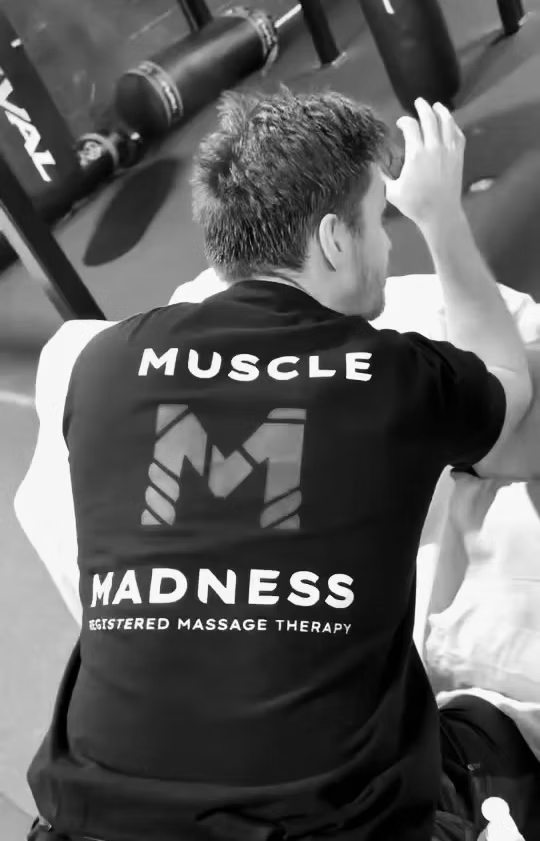
An RMT assessment matters because where you feel pain is often not where the problem starts. Before hands-on work, a Registered Massage Therapist in North York checks your posture, active and passive range of motion and movement patterns to find what is driving your discomfort. That way, your deep tissue massage or structural integration session targets the source, not just the sore spot. Book your assessment and massage today.
Where It Hurts Is Not Always Where It Starts
When you feel a burning ache in your lower back or tight, restricted movement in your neck, the natural instinct is to work right on that spot. But in hands-on therapy, the place you feel pain is often not the place it comes from.
Working on the body without a careful look first is like turning off a car’s check engine light without opening the hood. A clear assessment before any hands-on work helps build a recovery plan you can count on.
Chasing Symptoms vs Finding the Source
- Chasing symptoms Massaging only the sore area often brings short-term relief, but the ache comes back.
- Finding the source Looking at how your whole body moves helps uncover the pattern behind the pain, which leads to longer-lasting relief.
Active vs Passive Range of Motion: What Your RMT Is Looking For
A key part of your assessment compares how a joint moves when you move it yourself with how it moves when your therapist moves it for you.
- Active range of motion (AROM) How far you can move a joint using your own muscles. A limitation here can point to weakness, poor muscle coordination or your nervous system holding back.
- Passive range of motion (PROM) How far the joint moves when you fully relax and your therapist guides it. This shows how much the joint capsule, ligaments and fascia allow.
Why the gap matters: If you cannot lift your arm far on your own, but it moves easily when your therapist lifts it, the issue is probably not a short, tight muscle. It is more likely your nervous system guarding the area. In that case, deep work on the joint will not help much. Gentle movement and strengthening will.
How an Assessment Builds Your Personalized Plan
- Mapping compensation patterns Ongoing neck stiffness is often a sign of a stiff mid-back or a pelvis that is not moving well further down the chain.
- Telling tissue types apart An assessment helps your therapist tell the difference between a muscle or tendon strain and a ligament sprain before hands-on work begins. Learn more in our guide to sprain vs strain.
- Matching technique to need Your therapist can then choose between myofascial release, deep tissue work, Graston technique therapy or gentler options.
Why a Professional Assessment Is Critical for Your Recovery
When you walk into a clinic, you are not paying for a generic rubdown. You are investing in a clear, personalized plan to get back to feeling like yourself.
- Stops the symptom-chasing loop Your therapist spends time where it counts, so relief lasts longer than a day.
- Builds a plan around you Measuring how you move lets your therapist match the plan to your timeline, goals and body.
- Protects areas that are already overworked Pressing hard on tissue that is already strained from compensating can make things worse. An assessment shows which areas need release and which need support.
Stop guessing with your body. Let our experienced RMTs in North York trace your discomfort back to where it starts and build a clear plan for your recovery. Book your assessment and massage online.
What to Expect During Your First RMT Assessment in North York
- Conversation Your therapist asks about your health history, past injuries, daily routine and what you want to get back to.
- Posture check They look at how you stand and how your weight is balanced.
- Movement tests You move key joints on your own, then your therapist gently moves them for you.
- Specific checks Depending on your concern, they may test strength, flexibility or particular movements.
- Shared plan Your therapist explains what they found in plain language and agrees on the session plan with you.
The whole process is quick, comfortable and part of your booked time. It ensures every minute of hands-on work is focused where it helps most. You can book online or learn more about our team.
RMT Assessment FAQs
What happens during a massage therapy assessment?
Your RMT asks about your health history, goals and symptoms, then looks at your posture and tests your active and passive range of motion. They may also check strength and specific movements before choosing techniques for your session.
Is the assessment included in my massage appointment?
Yes. Every session at our clinic begins with an assessment. It is part of your booked time, whether you choose a 30, 60 or 90-minute appointment.
How long does an RMT assessment take?
A first-visit assessment usually takes 5 to 15 minutes, depending on how many areas you want to address. Follow-up visits often need only a quick check-in.
What is the difference between active and passive range of motion?
Active range of motion is how far you can move a joint on your own. Passive range of motion is how far it moves when your therapist moves it while you relax. Comparing the two shows whether tightness, weakness or protective guarding is limiting you.
Why does my therapist look at areas that do not hurt?
Because pain often shows up away from its source. A tight hip can lead to lower back pain, and a stiff mid-back can feed neck tension. Looking at the whole picture leads to better results.
Do I need to know what is wrong before booking?
No. Just book a time-based session and tell your therapist what you feel. The assessment helps you both understand what is going on.
What should I wear for my assessment?
Wear comfortable clothing you can move in. During hands-on work, you will always be professionally draped, with only the area being worked on uncovered.
Can an assessment help prevent re-injury?
Yes. By spotting weak links and compensation patterns early, your therapist can help you address them before they turn into a repeat injury.
How often should I be reassessed?
Your therapist reassesses briefly at each visit to track your progress and adjust your plan as your body changes.
Is a massage assessment covered by insurance?
Yes. The assessment is part of your RMT session, which is usually covered by extended health benefits. See our massage prices for direct billing details.
Can posture really cause pain somewhere else?
Yes. If your head drifts forward or your hips tilt, other muscles work harder to keep you upright. Over time, that extra load can show up as neck, shoulder or lower back pain, even though posture is the real starting point.
Is an RMT assessment the same as a medical exam?
No. An RMT assessment looks at how your muscles and joints move to guide your massage session. It does not replace a medical exam. If your therapist notices anything outside massage therapy, they will suggest you see your doctor.
What if my pain changes from visit to visit?
That is common and useful information. Your therapist rechecks your movement each visit and adjusts the plan, so your session always matches how your body feels that day.
Do I need an assessment for a relaxation massage?
A short check-in is always part of your visit, even for relaxation. It helps your therapist choose pressure and avoid any sensitive areas. For Swedish massage, it usually takes just a few minutes.
Can I bring reports from my doctor or physiotherapist?
Yes. Sharing reports, imaging results or exercise plans helps your RMT understand your history and work alongside your other care providers.
Why does my lower back hurt when the problem is my hips?
Your hips and lower back work as a team. If your hips are stiff or your glutes are weak, your lower back often picks up the extra work, which can lead to tightness and pain. Releasing and strengthening the hips usually helps the back feel better too.
What should I tell my therapist during the assessment?
Share where you feel pain or tightness, when it started, what makes it better or worse, past injuries or surgeries, and your goals. Also mention any medications or health conditions, so your therapist can keep your session safe and comfortable.
Can I ask for a specific technique after my assessment?
Yes. Your input matters. If you enjoy a particular technique, such as cupping therapy or deep tissue work, let your therapist know, and they will include it when it suits your needs.